
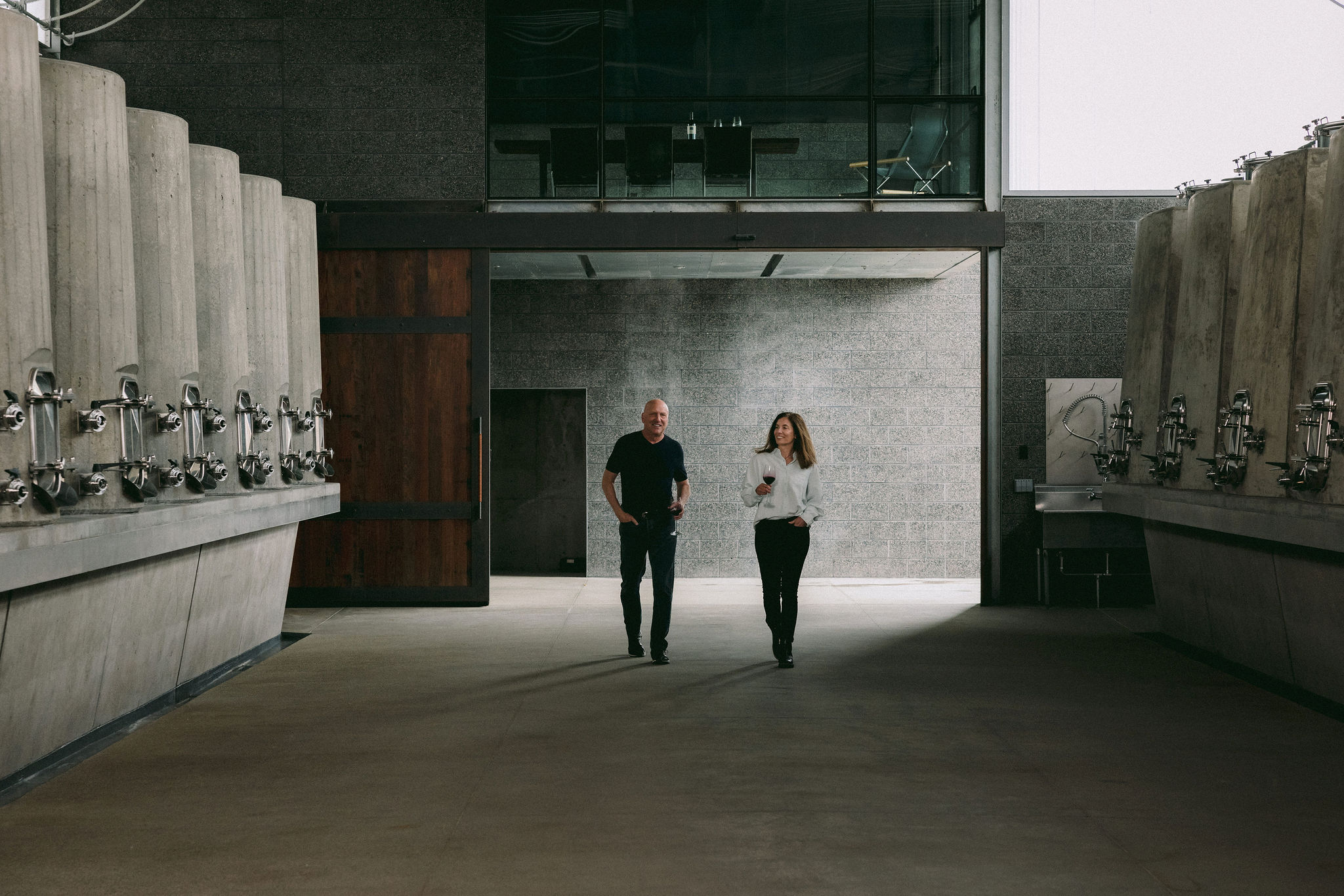
Why We Use Concrete Tulip Tanks at Epoch, as Featured in Robb Report
At Epoch Estate Wines, we use concrete tulip tanks for fermentation and aging, with a focus on freshness and texture. In a September 11, 2026, Robb Report Philippines feature on concrete tulip tanks, writers Mike DeSimone and Jeff Jenssen spoke with our winemaker, Jordan Fiorentini, about the role these distinctive vessels play in our cellar.
What Are Concrete Tulip Tanks?
Named for their shape, concrete tulips are vessels used in winemaking. Our tulips come from Italian manufacturer Nico Velo and hold 580 gallons each. At Epoch, their uses include fermenting Grenache Blanc and working with red wines, typically our Grenache-based blends.
They are one part of a cellar that also includes concrete eggs, dedicated concrete fermenters, and oak barrels. Each gives our winemaking team another way to work with the fruit from our estate vineyards.
Why Does Jordan Choose Concrete?
Jordan values concrete for the freshness, elegance, and textural character she finds it preserves in our wines. In the article, she explains that Sensibility would feel heavier and less fresh if it were aged entirely in oak.
The feature also describes her use of tulips for every vintage of Sensibility and Epoch White, with other uses depending on the wine and year. It offers a glimpse into the decisions behind a finished wine, including how time in different vessels can become part of its story.
Different Vessels, Different Roles
Our dedicated concrete fermenters are used for fermentation, while our tulips also offer an option for aging.
Our goal is to craft wines that express the places where they grow, with balance among fruit, acidity, tannin, and alcohol. Vessel choice is one of the details we consider along the way.
Explore the Choices Behind the Glass
Curious about the cellar behind your favorite Epoch wine? Explore our winemaking philosophy and vessels, then get to know our wines.
As you taste, try paying attention to texture alongside aroma and flavor. Does the wine feel rounded, firm, delicate, or expansive? Those observations can make the next conversation about winemaking even more interesting.


